What's in this article?
Table of contents will appear here...
When you think about "health," you probably picture a beating heart, strong lungs, or perhaps a well-functioning brain. But there is a silent superstar in your body that dictates everything from your mood to your immunity, and it’s likely not the organ you think it is.
Here is a fact that might change how you look at your next meal:
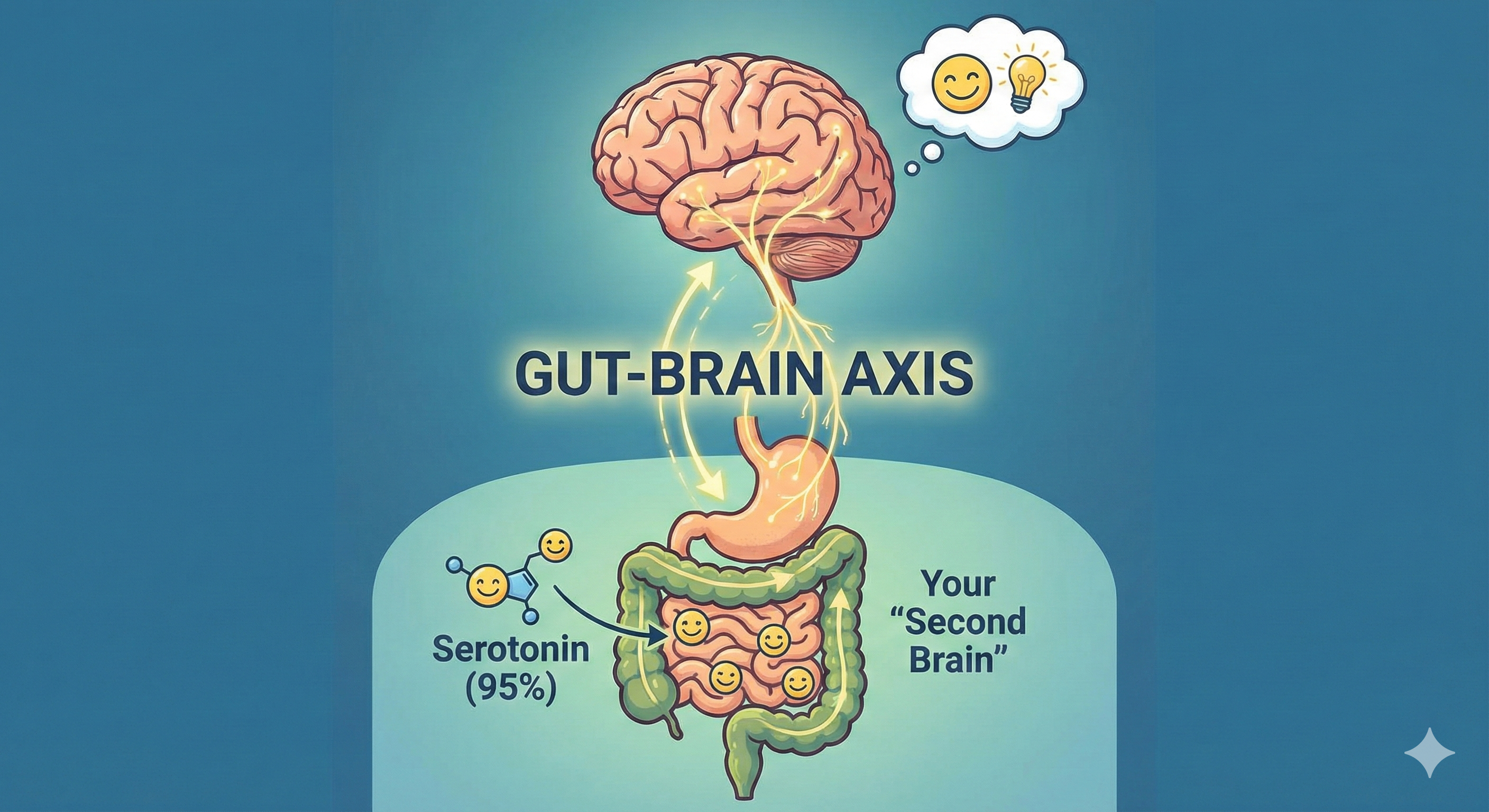
Interesting Fact: About 95% of your body’s serotonin—the "happy hormone" that regulates mood, sleep, and appetite—is produced in your gastrointestinal tract, not your brain.
We often view our stomach merely as a fuel tank—a place where food goes to be digested. But modern science has revealed that your gut is actually your "second brain."
The Science Behind the Fact The connection between your gut and your brain is real, physical, and chemical. It is called the Gut-Brain Axis.
Your gut is lined with more than 100 million nerve cells—more than you have in your spinal cord. This complex system, known as the Enteric Nervous System (ENS), doesn't just digest food; it communicates constantly with your brain.
This explains why you feel "butterflies" in your stomach when you're nervous or why you might feel nauseous when you receive bad news. Your gut and your brain are in a constant long-distance relationship, sending texts back and forth all day long.
Why This Matters for Your Health If 95% of your serotonin is made in your gut, it means that the state of your digestive system has a direct impact on your mental health.
Mood Regulation: An imbalanced gut microbiome (the community of bacteria living in your intestines) can lead to lower serotonin levels, which is linked to anxiety and depression.
Immune Defense: Roughly 70% of your immune system also resides in your gut. A healthy gut doesn't just make you happier; it makes you harder to kill.
Inflammation: A "leaky" or unhealthy gut can release toxins into the bloodstream, causing chronic inflammation that affects every organ in your body, including the brain.
How to Hack Your "Second Brain" The good news is that unlike your genetics, you can change your gut microbiome relatively quickly. Here is how to take care of your second brain:
Feed the Good Guys (Probiotics): Eat fermented foods like yogurt, kefir, sauerkraut, and kimchi. These foods are packed with live bacteria that replenish your gut flora.
Fertilize the Soil (Prebiotics): Bacteria need to eat, too. Fiber-rich foods like garlic, onions, bananas, and oats act as fertilizer for your good bacteria.
Avoid the Killers: High-sugar diets and processed foods feed the "bad" bacteria, which can crowd out the good ones and lead to inflammation.
Manage Stress: Since the street goes both ways, high chronic stress can actually kill off good gut bacteria, creating a vicious cycle of poor mood and poor digestion.
The Takeaway Healthcare isn't just about treating symptoms; it's about understanding the complex web of connections within us. Next time you are deciding what to eat, remember: you aren't just feeding your stomach; you are feeding your mind.